
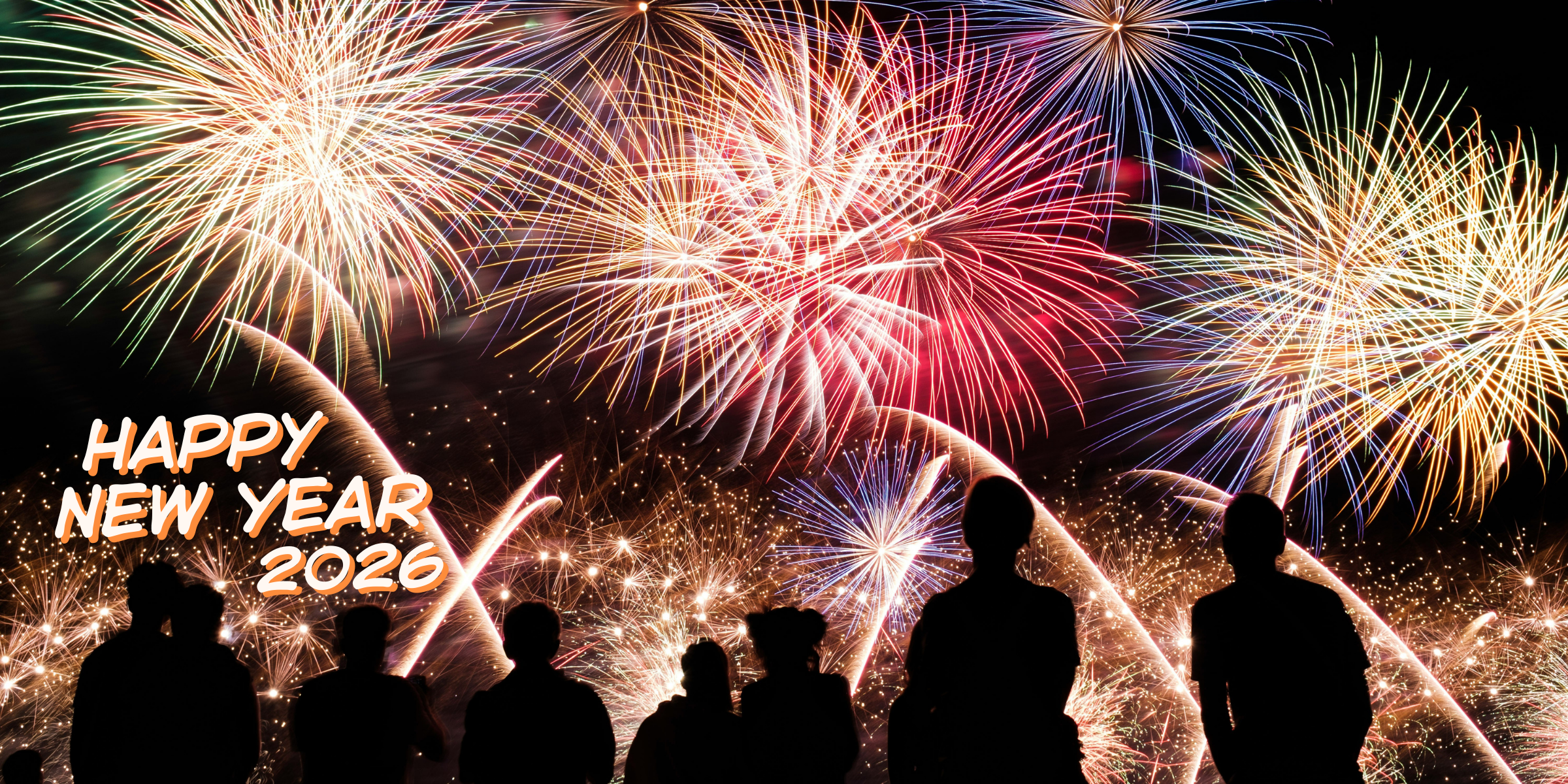
There’s something about New Year’s Eve that always makes me pause, even when I’m not quite sure how I want to step into the year ahead. It’s not only the fireworks or the countdown, but the feeling of a shared moment that stretches across languages, cultures, and time zones.
My Many New Year’s Eves
Some of my strongest holiday memories are tied to Spain. I grew up eating twelve grapes at midnight, watching the live broadcast from Puerta del Sol in Madrid. Waiting for the bells to ring while half the family counted out loud and the other half double and triple-checked the grape bowls to make sure everyone had exactly twelve. Trying not to laugh so that we didn’t choke on our grapes, but giggling anyways. Afterwards there was music at home, noisy conversations, and that joyful chaos that fills a family home late at night. I still can’t imagine a New Year’s Eve without grapes.
Germany felt different when we moved there. I watched Dinner for One, tried Bleigießen, and never quite warmed up to fireworks. The noise felt overwhelming and I always flinched instead of celebrating. Even now, I associate German New Year’s Eve with a strange mixture of comfort and distance, as if I’d stepped into someone else’s tradition and was unsure where I fit.
Last year, I welcomed the New Year in Sydney, sitting between Fleet Steps and Mrs Macquarie’s Chair with my sister. We arrived early, very early, so we wouldn’t miss a spot. My favourite memory isn’t of the fireworks, although they were breath-taking, but having a day-long picnic, drinking slushies in the heat and strangers walking around sharing sunscreen. The atmosphere was so different from the winters I was used to that it felt surreal.
We were the first in the family to reach the New Year and I remember feeling both happy and very sleepy. The next day, at ten in the morning, we sat half awake on the beach and ate twelve grapes over videocall with our parents in Europe, the internet cutting out and the family dog barking in the background. It was chaotic and imperfect and utterly ours.
With my husband, Kurdish traditions became part of my life, too. I’ve celebrated Newroz once or twice now, and I love how it aligns more naturally with the seasons and, coincidentally, with my birthday. There’s something grounding about a celebration that welcomes light, warmth, and beginnings at the moment nature does the same. In many ways, Newroz feels more intuitive to me than New Year’s Eve in winter ever has.
Over time, our traditions blended. His family now eats grapes because of me, and I celebrate Newroz because of them. It feels like a small reminder that traditions aren’t fixed. They travel, shift, and adapt to the people who carry them. And you’re allowed to carry them with you wherever you go, share them with whoever you want, and allow them to change as you change.
Traditions Around the Globe (A Small Glimpse)
Just as my own celebrations have crossed borders, New Year itself is welcomed in countless ways all over the world. Each tradition reflects history, environment, belief systems, and the values a culture carries forward.
Japan
In Japan, New Year’s Eve is closely tied to reflection and renewal. Buddhist temples ring their bells 108 times during Joya no Kane, with each toll representing the release of one earthly desire. The ritual symbolises letting go of the emotional weight of the past year and entering the new one with clarity.
Scotland
In Scotland, Hogmanay celebrations include the tradition of first-footing. The first person to cross the threshold after midnight brings symbolic gifts such as coal, bread, or whisky to ensure warmth, food, and good fortune. The custom is deeply rooted in ideas of hospitality and communal luck.
Denmark
In Denmark, people quite literally leap into the New Year by jumping off chairs at midnight. The act symbolises leaving the old year behind and stepping boldly into what comes next. It’s playful, collective, and surprisingly meaningful.
Ethiopia
Ethiopia celebrates its New Year, Enkutatash, in September, at the end of the rainy season. It marks renewal after nature’s rest and is often associated with flowers, songs, and family gatherings. The timing reflects a close connection between calendars and the natural world.
Thailand
In April, Songkran welcomes the Thai New Year with water-splashing rituals. What may look like playful chaos is rooted in symbolism. Water represents cleansing, renewal, and the washing away of misfortune from the year before.
China
The Lunar New Year is marked by family reunions, firecrackers, and red envelopes filled with money as symbols of protection, prosperity, and good luck. Noise and colour play an important role in welcoming fortune and warding off negative energy.
Brazil
In Brazil, many people wear white on New Year’s Eve to symbolise peace and renewal. Along the coast, especially in Rio de Janeiro, people gather at the sea to honour Yemanjá, the goddess of the ocean in Afro-Brazilian traditions. Flowers are offered to the waves, and some people jump over seven waves at midnight, making a wish with each one for the year ahead.
The Philippines
In the Philippines, round shapes dominate New Year’s Eve celebrations. Circular fruits fill the table, polka dots appear on clothing, and coins are often kept in pockets. The roundness symbolises prosperity and abundance, turning everyday objects into carriers of hope.
These traditions don’t just mark time, they express belonging, hope, memory, humour, and identity. They remind us that a new beginning doesn’t have to look the same everywhere to hold meaning.
Resolutions and the Pressure to Start Fresh
Sometimes, I look back and realise I’ve had quiet New Year’s Eves that didn’t feel fulfilling, and others full of family giggles and grape-counting that still make me smile. I’ve learned that how we celebrate often matters more than when.
I’ve never felt fully ready to make big resolutions on the first of January either. It’s cold, the holidays aren’t even over yet, and people already talk about dieting and goals and productivity. Everyone seems exhausted before the year even begins.
If resolutions work for you: amazing!
If you’d rather start in March when nature breathes again, or at any other point in the year: that is valid, too.
If You Feel the Same
If you ever feel pressured to celebrate in a certain way or change everything by a specific date, you are not alone. It’s perfectly fine to celebrate differently, to skip resolutions, or to create traditions that feel right for you.
And if you do want to set intentions, especially as a multilingual person, I hope you’re gentle with yourself. Let your languages be sources of joy instead of expectations. Allow yourself to mix them, reconnect with them, or rest from them. Bring your traditions into new places if they matter to you. Celebrate Newroz in Europe or eat grapes in Brazil or make paella in January just because it reminds you of home.
What makes your life rich isn’t celebrating perfectly, but celebrating authentically.
A Wish for the Turning of the Year
Wherever you are when the year changes, whether you’re counting grapes, jumping off chairs, lighting candles, or doing nothing at all, I hope the moment feels like yours.
May the next year meet you gently.
May your languages stay close to you.
May your traditions travel with you.
May your beginnings arrive when you’re ready.
Happy New Year, everyone!
And if you need to hear it one more time: You don’t need to start the new year “perfectly”.
If this moment feels quiet, emotional, or mixed: That’s okay.
There’s no single right way to step into a new year.
If you need support navigating multilingual life, you can reach out anytime.
Leave a Reply