Blog
Thoughts on multilingualism, language development, identity and everything in between. Written for families, individuals, educators and businesses — and anyone who’s ever felt like they live between languages.
-
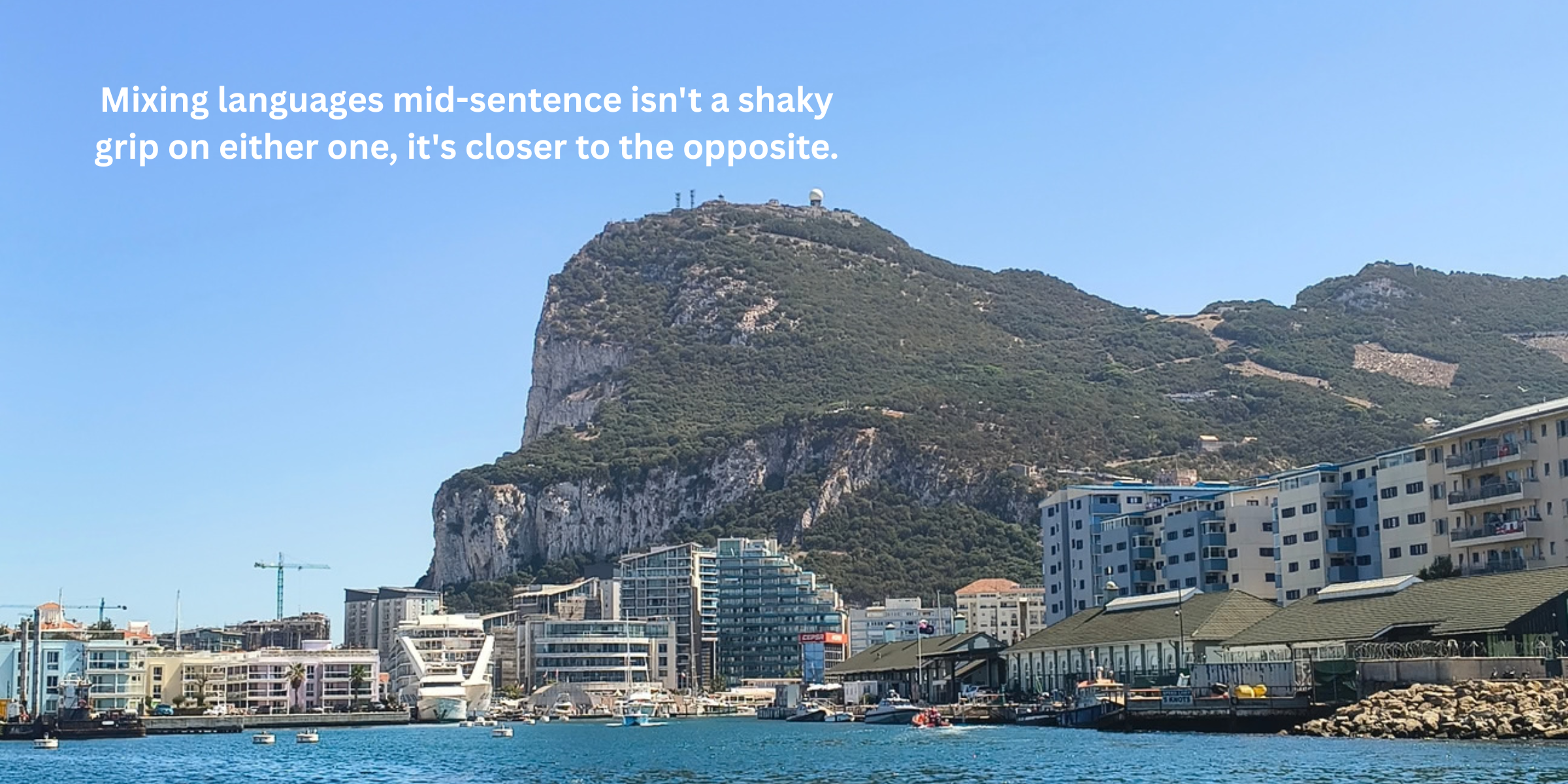
On code-switching, Llanito, and the freedom of not having to choose I was in a small shop in Gibraltar, halfway through a day-trip with my sister and a friend, when the cashier asked me something in Spanish, paused, switched to English mid-sentence, then dropped back into Spanish for the total. I hadn’t said a word…
-
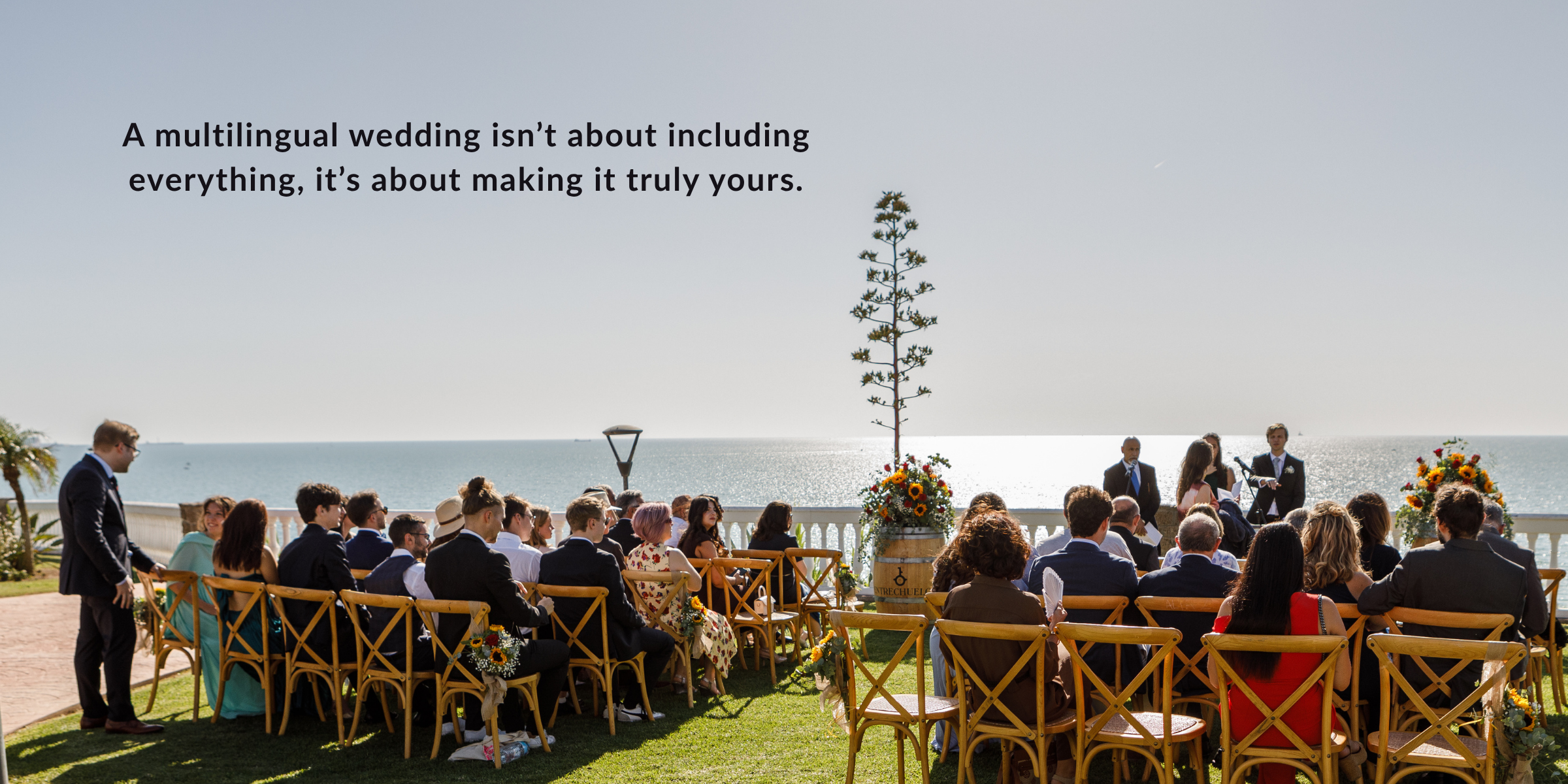
Three people led our wedding ceremony, and none of them was a professional officiant. My uncle led one part, in Spanish. Our closest German friend led another, in German. My childhood best friend from Spain took on the English part, a language that wasn’t the obvious choice for her at all, and she agreed anyway…
-
Somewhere inside most multilingual companies, there’s an employee everyone quietly relies on. They’re the one who gets pulled into a call to smooth over a client conversation that’s not going well, and the one CC’d on an email thread so they can “just double check the tone before it goes out.” They didn’t sign up…
-
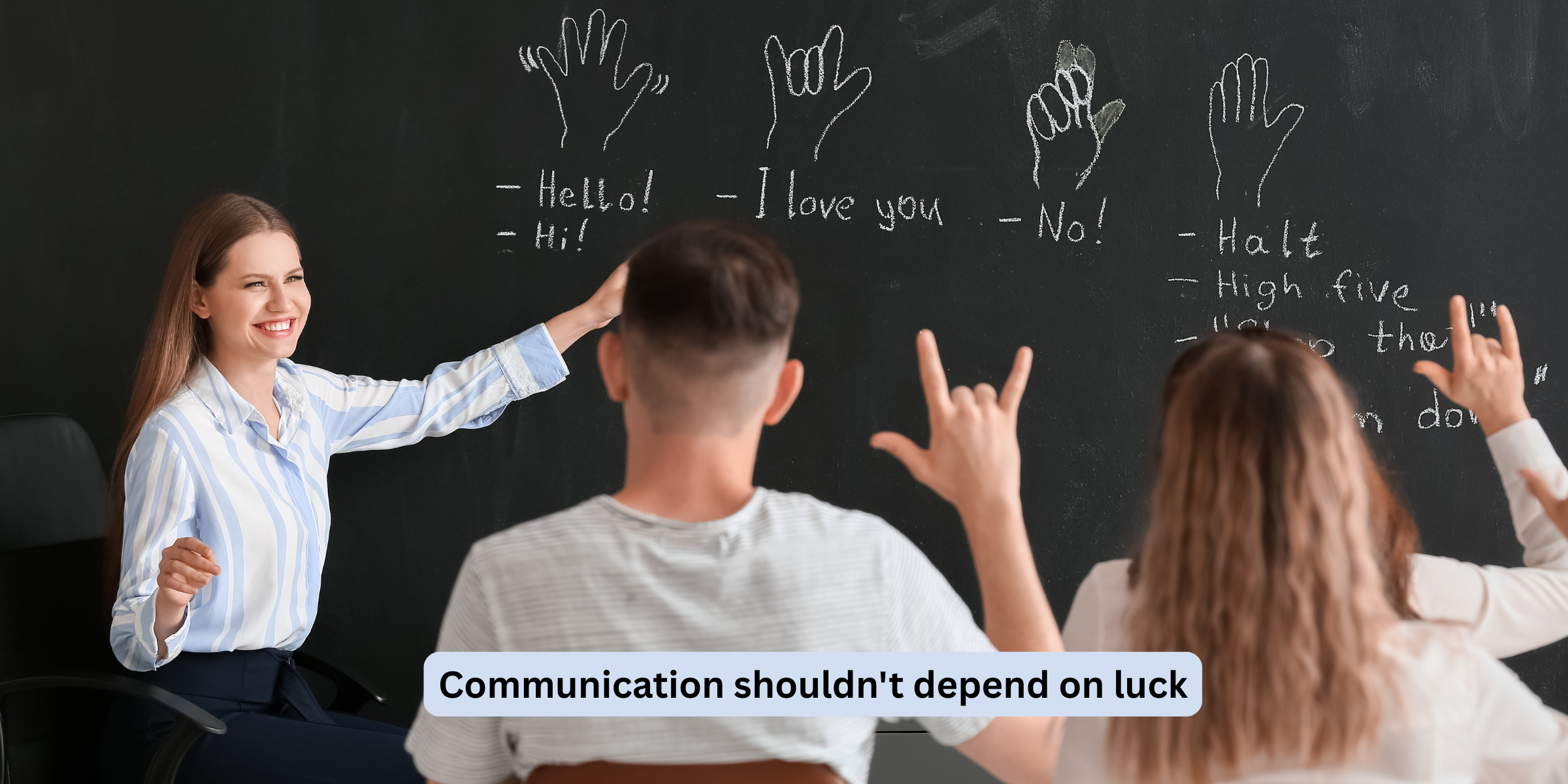
Daniel Jillings was twelve years old when he started campaigning for a British Sign Language GCSE. Five years later, the government confirmed it would happen, and last September, that promise became real: British Sign Language became a GCSE subject for the first time in the qualification’s history. It’s a genuine milestone, and also, right now,…
-
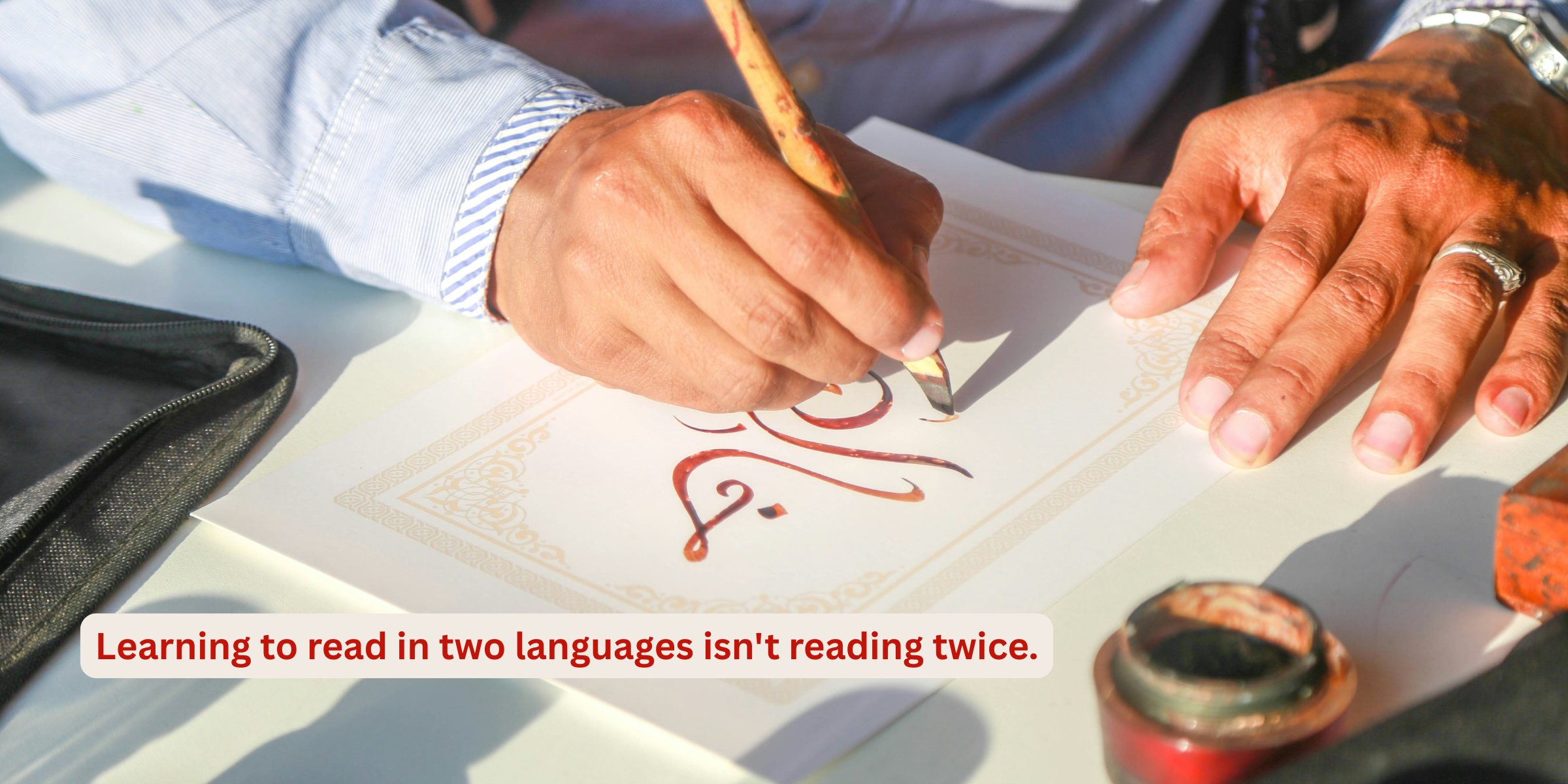
What actually transfers when a child, or an adult, learns to read across two or more scripts Привет. If you don’t read Cyrillic, that’s just a shape on the page, not a word yet. It reads “hello,” and it took me a few weeks in a university class about Russian grammar to sound it out…
-
Why cumulative exposure, not fluency, decides whether a child grows up bilingual. A client told me something recently that I hear in some form almost every week: “How can I teach my daughter English when my own English still isn’t perfect?” She’d learned English at school in her twenties, uses it daily at work, reads…
-
How to Give Feedback That Actually Lands in a Multilingual Team When companies build multilingual teams, they almost always check for one thing: does everyone speak the working language well enough. What they don’t check is whether everyone expects feedback delivered the same way. Two people can use the exact same words, in the exact…
-
A Practical Guide for Multilingual Families as the New School Year Begins I still remember my first day at a new school in Germany. The whole class turned around, and then the questions came, all at once, in rapid-fire German: How old are you? What’s your name? Where are you from? Can you even understand…
-
Why Doch, Genau, and Eben Are Harder Than Any Grammar Rule A client of mine, an engineer who’d moved to Munich from Portugal a few years ago, told me something that stuck with me. His German was, by any objective measure, good. He’d passed his C1 exam. He read the news in German, wrote emails…
-
A mother I spoke with recently described it with real frustration in her voice. She and her husband had done everything they thought they were supposed to do: one parent, one language, consistently, for years, with books, songs, and cartoons all carefully split between German and Turkish. And yet her two children, aged five and…
-
A few months ago, someone forwarded me a job listing for a marketing role. Under requirements, in bold: “Native English speaker essential.” The role involved writing product copy, yes, but also managing a team spread across four countries, in none of which English was anyone’s first language. I read it twice, then thought about who…
-
On translanguaging in the classroom, old habits, and what actually helps a child learn I was ten years old when my family moved to Germany. I’d had four months of German lessons before we arrived, nowhere near enough for a full school day in the language. My teachers could’ve taken the standard approach: German only,…
-
On confidence, competence, and the gap between them Plenty of people who speak two, three, even four languages still won’t call themselves bilingual. Ask them why, and the ability isn’t usually the problem. It’s a nagging sense that they don’t quite qualify, that a “real” bilingual wouldn’t hesitate, wouldn’t mix up a preposition, wouldn’t need…
-
It isn’t regression, and it isn’t forgetting. Here’s what’s really going on when a multilingual child clams up around extended family. A mother I spoke with recently told me her son hadn’t said a single word of French in three days. Not to his grandmother, not to his cousins, not even to answer a direct…
-
Getting hiring right is only half the job. What happens next determines whether your new international employee stays. The first 90 days are make-or-break for any new hire. For international employees, the stakes are even higher, and the margin for error is smaller. According to a 2026 HR Leader survey, 20.5% of HR leaders report…
-
Every year, people find themselves in the same situation. A trip is approaching, the flights are booked, and suddenly they realise they don’t know more than a handful of words in the language spoken there. The question usually follows quickly: is it even worth trying to learn a language before a holiday at this point?…
-
A family told me, some time after the event, about a conversation they’d had with their child’s kindergarten. Their daughter had been flagged. She wasn’t using enough words, and there might be a delay. They should consider moving her to a different nursery, one better equipped to support her. Their daughter was being raised bilingually:…
-
On Dream Languages, Emotional Geography, and What it Means to Live in More than One Tongue A few weeks ago I had a dream in Turkish that genuinely unsettled me. I was at a bazaar with my mother-in-law, somewhere in Türkiye. We’d been looking after a child (I’m not entirely sure whose, in the way…
-
I had Spanish lessons in Germany throughout my childhood. Regular, dutiful lessons in a classroom where Spanish existed as an academic subject rather than a living thing. My Spanish was competent. It was also, as my relatives in Andalucía made abundantly clear every summer, extremely proper. Two or three weeks in the south of Spain…
-
When “We All Speak English” Isn’t Actually Working There’s a meeting that happens in organisations all over the world, several times a week, where someone is struggling and nobody says so. The room — or the video call — contains people from two or three different countries. Everyone speaks English, to varying degrees, with varying…
-
Heritage language loss rarely happens all at once. It happens in steps — each one entirely reasonable, each one quietly reshaping what the next generation inherits. A client of mine grew up hearing Catalan. She learned it with her grandparents — weekend visits, summer stays, the particular intimacy of a language that belongs to a…
-
A Practical Guide for the Educators Who Make the Difference There’s a particular kind of silence that multilingual children learn quickly. They speak at home — freely, comfortably, often in more than one language — and then they arrive at school and become quiet. Teachers sometimes interpret this as shyness, or as a language barrier…
-
What’s Really Going On When Motivation Goes Missing When I was about four years old, living in England, my mum would speak to me in Spanish at the breakfast table and I’d answer in English. Every time. She’d try again in Spanish. I’d answer in English again, and eventually I’d tell her, with the casual…
-
A Practical Case for Taking Language Seriously as a Business Strategy There’s a version of the language barrier that most people recognise. The meeting that goes slightly off-track because one participant isn’t fully following. The mail that gets misread because the tone didn’t come through in translation. The client call that ends inconclusively because both…
-
On returning to a place where part of you has always lived This year I’m going to the feria in Andalucía, the week-long spring festival of flamenco, food, and celebration that defines the social calendar of the south, and I’ve completely forgotten how to dance sevillanas. I remember the shape of it: the turns, the…
-
A multilingualism consultant reflects on her own rocky start in the German school system, and the teachers who made all the difference. I was ten years old when my family moved to Germany. My parents had done what they could: they’d organised a private tutor, and I’d had four months of German lessons before we…
-
What Seasonal Celebrations Do for Multilingual Children That Flashcards Can’t This time of year, something quietly extraordinary happens in households across the world. Eggs are hidden in gardens. Pasos float through cobblestone streets under a canopy of incense smoke. A flame passes from candle to candle in a darkened church until the whole building is…
-
Eight countries. Five languages. Three officiants. One very carefully considered decision about where in the world to get married. That’s a snapshot of our wedding, and behind every one of those numbers is a choice we had to make with care, sometimes against the grain of what felt easiest or most expected. This is the…
-
Why Language Belongs at the Heart of Your Inclusion Strategy Walk into almost any mid-sized company today and you’ll find a quietly multilingual workforce. Someone doing mental arithmetic in Polish before answering in German. A team meeting where three people are working hard to follow a fast-paced conversation in a language that isn’t their first.…
-
Many multilingual families begin with the same piece of advice: one parent, one language. It sounds simple. One parent speaks one language, the other parent speaks another, and the child grows up bilingual. But after a while, many parents notice something they didn’t expect. Their child starts answering mostly in one language, often the language…
-
How History, Terminology, and Women’s Roles Shaped the Languages We Carry Today Every year, three observances appear close together on the calendar: International Mother Language Day on the 21st of February, International Women’s Day on the 8th of March, and in the UK, Mother’s Day, which also falls in March most years. At first glance,…
-
Most of the time, language stays in the background of our daily work. Meetings happen, mails are written, ideas are exchanged, and we rarely think about the mechanics behind communication. That changes quickly when we start working in a language that isn’t our strongest one. This often happens during professional transitions: joining an international company,…
-
Many adults quietly carry the feeling that learning another language is something they should’ve done earlier in life, something that belongs to childhood, school years, or a different phase that has already passed. Over the years of living between languages and working in multilingual environments, I’ve heard this concern again and again. People often tell…
-
Every year on the 21st of February, International Mother Language Day is observed around the world as an initiative of UNESCO to promote linguistic diversity and multilingual education. On the surface, it may appear as one more awareness day among many, but for millions of people, it touches something far more intimate: the languages that…
-
On intimacy, language, and the quiet work of understanding Falling in love across languages is a curious blend of magic and challenge. Sometimes it looks like laughter over a word neither of you can quite pronounce. Sometimes it looks like silence, searching for the right one. Sometimes it’s shared understanding, and sometimes it’s one misunderstanding…
-
In many international teams, communication problems rarely feel dramatic. There are no obvious conflicts, no open arguments, no clear mistakes. Instead, there’s low-level friction: small misunderstandings, repeated clarifications, decisions that seem clear in theory but blurry in practice. In multilingual teams, this friction is often blamed on language. Yet language itself is rarely the root…
-
Growing up with multiple languages is often a source of fascination for people around bilingual children. Yet, the questions they’re asked tend to be surprisingly predictable and, at times, unintentionally limiting. Many bilingual individuals will recognise at least some of the following questions I heard repeatedly while growing up: Which language do you like most?Which…
-
Every year, people set intentions about who they want to become. Resolutions are written down, goals are set, and intentions often centre on self-improvement: becoming more confident, communicating more clearly, learning something new. Learning a new language often appears somewhere on that list. Many people associate personal growth with clear goals and visible progress. What’s…
-
For a long time, speaking more than one language was treated as a nice extra. Something that looked good on a CV, something that might give you a small edge, but rarely something that was seen as essential. That way of thinking is quietly falling apart and being replaced with a more multilingual-focused approach. In…
-
On the evening of the 5th of January, shoes are carefully lined up in hallways, on balconies, terraces or by windows. They’re checked once, then twice. Some are placed neatly side by side, others slightly crooked, but all with the same quiet hope: that the Three Wise Men will know exactly where to leave the…
-
There’s something about New Year’s Eve that always makes me pause, even when I’m not quite sure how I want to step into the year ahead. It’s not only the fireworks or the countdown, but the feeling of a shared moment that stretches across languages, cultures, and time zones. My Many New Year’s Eves Some…
-
There’s something in the air during the holiday season. The festive lights, the cheerful messages, the gift-shopping, the reunions, the joy of togetherness all feel like the world is gently (or not so gently) nudging you to feel a specific way. For many multilinguals, this time of year comes with more than just busyness and…
-
This December feels strange in a way I didn’t expect. I’ve been back to Spain many times over the last few years and this year particularly often. I was here in Spring, and Summer, and Autumn. But somehow, winter feels different. I haven’t spent Christmas here for so long that I’d forgotten how the humid…
-
As we near the end of the year, many Western companies invite their employees to what is traditionally called a Christmas Party. These events are a lovely opportunity to acknowledge everyone’s hard work and celebrate achievements made throughout the year. They’re also a chance to spend time together, an increasingly rare moment of in-person connection…
-
December has a way of amplifying everything in multilingual families. The joy feels bigger. The nostalgia feels sharper. And the tensions? They quietly grow in the spaces between airports, traditions, and languages. As I pack my suitcase to fly home for Christmas, I can’t help thinking about how many songs are built around the same…
-
Welcome to Multi Lingua Consulting It is with great joy, and also, if I’m honest, a bit of fear, that I hit publish on this post and officially launch my very own business: Multi Lingua Consulting. It’s been at least a year in the making, and what a rollercoaster the last year has been! Businesses,…