
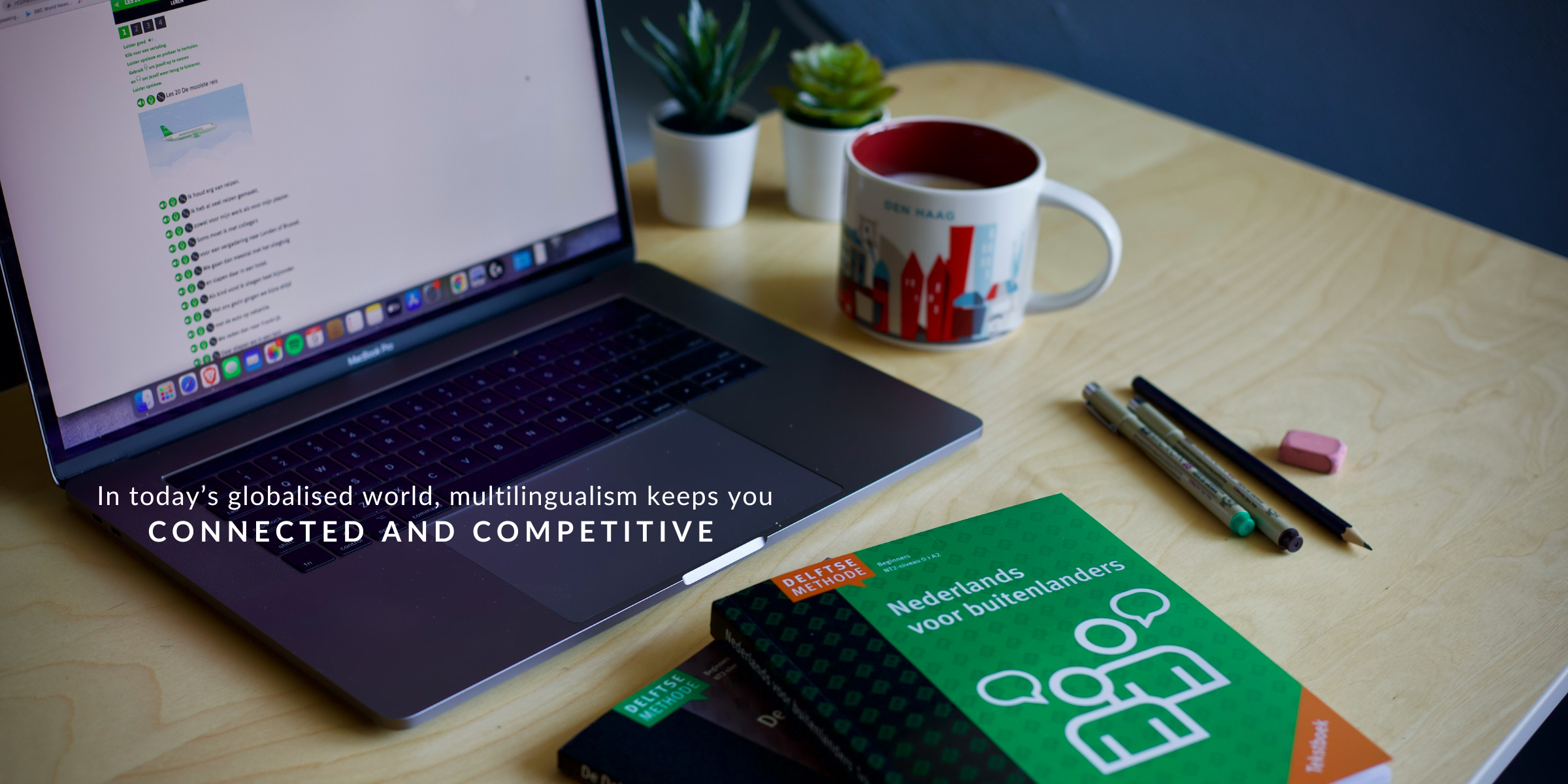
For a long time, speaking more than one language was treated as a nice extra. Something that looked good on a CV, something that might give you a small edge, but rarely something that was seen as essential. That way of thinking is quietly falling apart and being replaced with a more multilingual-focused approach.
In a world shaped by globalisation, digitalisation, and constant cross-border exchange, multilingualism has become a practical, everyday skill. It influences who gets hired, who gets trusted, and who’s offered opportunities that go beyond the job description. Even roles that appear firmly local are now embedded in international systems, whether through clients, colleagues, suppliers, or platforms.
This shift isn’t about prestige or intellectual status. It’s about function. Multilingualism makes people more adaptable in environments that are increasingly complex, diverse, and unpredictable.
More than Employability on Paper
The job market is crowded, and formal qualifications alone rarely set someone apart anymore. What employers are often looking for, even if they don’t always articulate it clearly, are people who can move between contexts, adjust to different expectations, and handle uncertainty without freezing.
Multilingual professionals tend to develop exactly these abilities.
They don’t simply translate words from one language into another. They learn to read situations, to notice when something feels slightly off, and to adjust their communication before misunderstandings escalate. This kind of sensitivity is valuable in any role that involves people, which in reality is most roles.
In sectors such as healthcare, education, customer service, or hospitality, language can directly shape trust, safety, and outcomes. But even in roles that are considered technical or language-neutral, multilingual employees often find themselves acting as informal connectors between teams, departments, or cultures, whether or not this labour is recognised.
Communication that Actually Works
International teams are increasingly becoming the norm. On paper, everyone may be working in the same shared language. In practice, this doesn’t mean that everyone feels equally confident expressing themselves or equally comfortable challenging ideas, giving feedback, or asking for clarification. Communication styles differ, as do assumptions about hierarchy, politeness, and responsibility.
People who are used to operating across languages are often more aware of these invisible layers. They tend to notice what isn’t being said, to recognise hesitation or indirectness, and to understand that silence doesn’t always mean agreement.
This awareness matters. Projects run more smoothly when fewer things need to be repaired later. Teams function better when people feel understood rather than merely included. Language, when handled with care, becomes a tool for collaboration rather than a source of friction.
Mobility, Visibility, and Opportunity
As organisations expand across borders, they look for employees who can move with them, sometimes geographically, but more often mentally and professionally.
Multilingual professionals are frequently perceived as more flexible and lower risk in international contexts. They’re assumed to adapt faster, navigate unfamiliar systems with greater confidence, and cope better with ambiguity. Whether or not this assumption is always fair, it often leads to greater visibility, earlier responsibility, and access to opportunities that aren’t formally advertised. Over time, this kind of exposure can shape entire career paths, opening doors to international projects, senior roles, or more autonomous ways of working.
Language and Leadership
Leadership isn’t only about decision-making. It’s about relationships, trust, and interpretation.
Leaders who speak more than one language often approach their role differently than their monolingual colleagues. They tend to listen more carefully, negotiate more flexibly, and remain aware that meaning is rarely universal. This isn’t a coincidence, but a result of long-term exposure to difference and misunderstanding.
In multilingual environments, language ability can influence who people trust, who they feel comfortable approaching, and who they believe understands the wider context. While not every leader needs to be multilingual, those who are often find themselves better equipped to manage complexity and cultural nuance.
Cultural Competence as a Workplace Skill
Multilingualism is never just about grammar or vocabulary. Learning and using more than one language builds patience, empathy, and tolerance for uncertainty. It teaches people to ask questions rather than assume, and to accept that their own way of doing things isn’t the default.
These are deeply transferable skills. At work, they show up as emotional awareness, problem-solving ability, and resilience. In a world shaped by migration, diversity, and constant change, these qualities are increasingly difficult to replace or automate.
So, is Multilingualism Really a Must?
Not everyone needs to speak five languages, and not every role requires advanced proficiency. But the ability to engage with more than one language, and with the perspectives and realities that come with it, is becoming part of what it means to be adaptable and future-ready at work.
Multilingualism opens doors, softens borders, and creates professional possibilities that often don’t exist on paper. In a job market that continues to stretch across linguistic and cultural lines, speaking more than one language is no longer just an advantage.
It’s a way of staying relevant.
Thanks for reading!
If you’re facing questions, challenges, or have set yourself goals around multilingualism in your work, family life, education, or life in general, I offer individual consulting sessions to provide guidance, clarity, and practical support.
I also share insights and resources on my social channels. (Instagram | Facebook | LinkedIn)
Leave a Reply