Growing up with multiple languages is often a source of fascination for people around bilingual children. Yet, the questions they’re asked tend to be surprisingly predictable and, at times, unintentionally limiting. Many bilingual individuals will recognise at least some of the following questions I heard repeatedly while growing up:
Which language do you like most?
Which country do you like most?
Which language do you think in?
Which language do you dream in?
Can you say something in [insert language]?
While these questions are usually well-intentioned, they can be difficult to answer — especially for children. For me, they often felt as impossible as the question “Which parent do you love the most?”. In families where different languages are associated with different people, places, or emotional bonds, any answer other than “It depends” or “Both” can feel loaded. Ironically, these answers are often unsatisfying for the person asking the question.
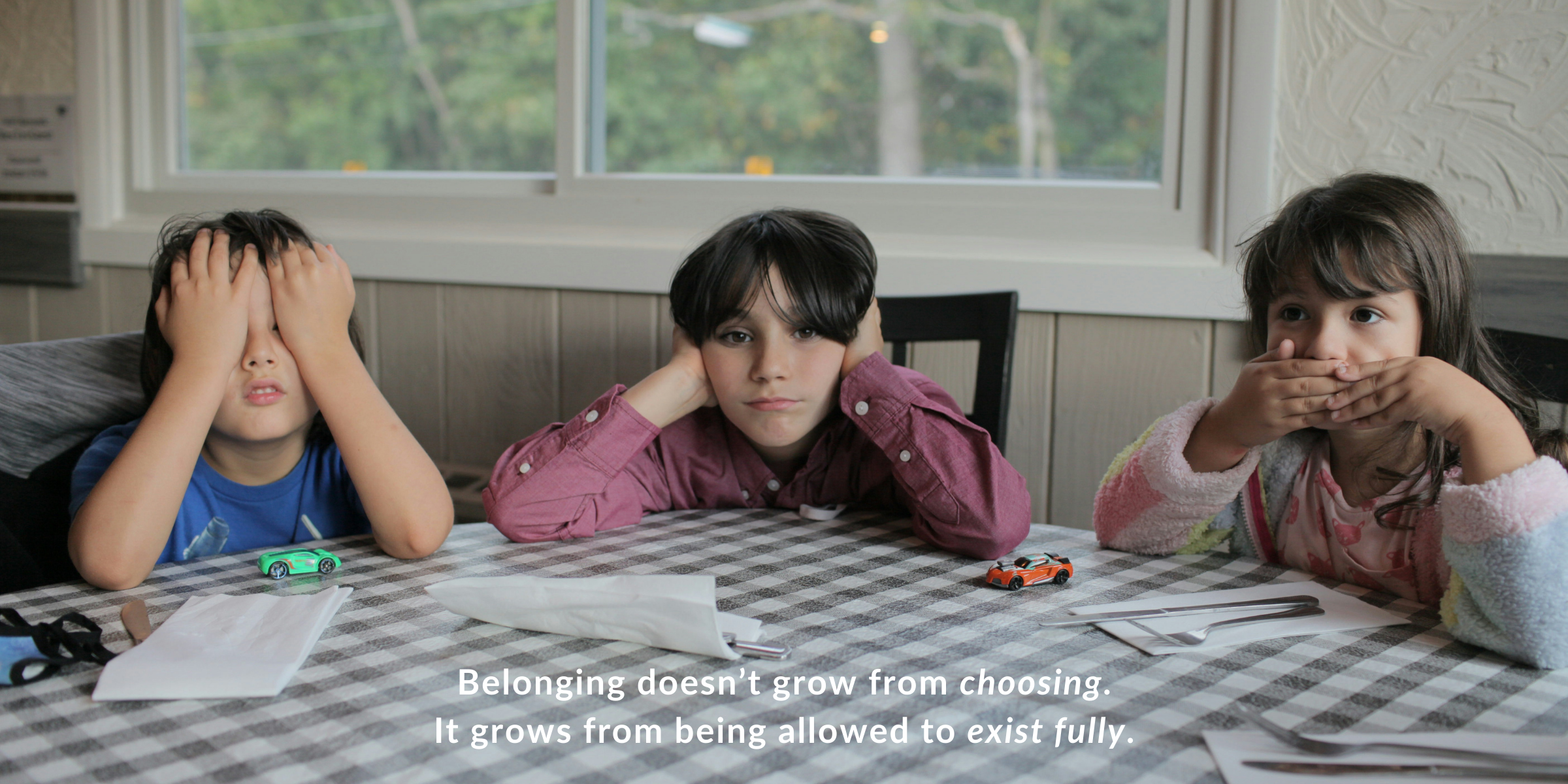
Bilingual children are also frequently met with assumptions rather than questions. Instead of “What do you want to be when you grow up?”, I often heard “You’re going to be a great translator one day!” — as though speaking multiple languages automatically determined a future career path. Over time, this can create the impression that a child’s identity is being reduced to their languages. More subtly, such questions and assumptions can suggest that bilingualism requires choosing — between languages, cultures, or identities — when in reality, it does not.
For children who move between countries or grow up across cultures, this pressure can become particularly pronounced. I experienced this first-hand when my family moved countries during my teenage years. Being repeatedly asked to rank languages or countries eventually became exhausting, and at one point I gave an answer designed more to end the conversation than to reflect how I actually felt. This reaction wasn’t about preference, but about frustration — and it highlights an important point: bilingualism isn’t just about language proficiency. It’s deeply connected to identity, belonging, and emotional experience.
Many bilingual adults eventually realise that the answers they gave as children were, in fact, accurate all along. I now find myself answering these questions in exactly the same way I always did — with “It depends” or “Both” — but no longer out of uncertainty or fear of disappointing others. With time and confidence, it becomes clear that bilingualism doesn’t require choosing, and never did.
To better understand why these questions are so difficult, it helps to look at them more closely.
Which language do you like most?
Some bilinguals prefer reading, writing, or speaking in one language over another, often because they feel more proficient in it. I tend to reach for English when reading literature, which has naturally strengthened my vocabulary in that language. But preference doesn’t equal attachment. I might admire the efficiency of Spanish or enjoy the humour embedded in German expressions. Each language plays a different role, making this question far more complex than it appears.
Which country do you like most?
This question depends on countless factors — landscape, culture, politics, people, food, and personal history. For many bilinguals, myself included, the idea of choosing one “favourite” country rarely reflects reality. Wanting to combine elements from different places is often a more accurate description of how belonging is experienced.
Which language do you think in?
The answer is usually straightforward and yet often unsatisfying: it depends. My thoughts shift fluidly between languages depending on context, topic, and environment. Bilingual cognition doesn’t operate within fixed boundaries.
Which language do you dream in?
Again, it depends. Dreams are shaped by recent experiences and emotional contexts. I still remember the confusion of waking from a dream in which I spoke English to my Spanish grandfather — a mismatch that felt so wrong it lingered long after waking.
Can you say something in [insert language]?
While usually meant playfully, this request often feels performative. Even now, I rarely know what to say when asked, and usually end up asking what the other person would like me to say — a question that almost never receives an answer.
None of these questions are inherently wrong. However, they often oversimplify what it means to grow up bilingual and can unintentionally place pressure on children to choose between languages or cultures. Over time, this pressure may lead them to distance themselves from part of their heritage.
A simple shift in perspective can make a significant difference. Instead of asking bilingual children to choose, it can be more meaningful to invite them to explore.
Consider questions such as:
Do you feel like a different version of yourself when you switch languages?
Is there a word in one of your languages that you wish existed in another?
Do you feel more connected to one culture than another — and why?
How do humour and sarcasm translate between your languages?
How do you decide which language to use when speaking with other bilinguals?
These questions tend to lead to richer, more thoughtful conversations. By moving away from comparison and choice, and towards curiosity and exploration, adults can support bilingual children in embracing the full complexity of their linguistic and cultural identities — without asking them to give up any part of it.
Thanks for reading!
If you’re navigating questions, challenges, or personal goals around multilingualism — whether in your work, family life, education, or everyday experiences — I offer individual consulting sessions that focus on clarity, reflection, and practical support.
You can find more information about my work and current offers here. I also share ongoing insights and resources on Instagram, Facebook, and LinkedIn.
Leave a Reply