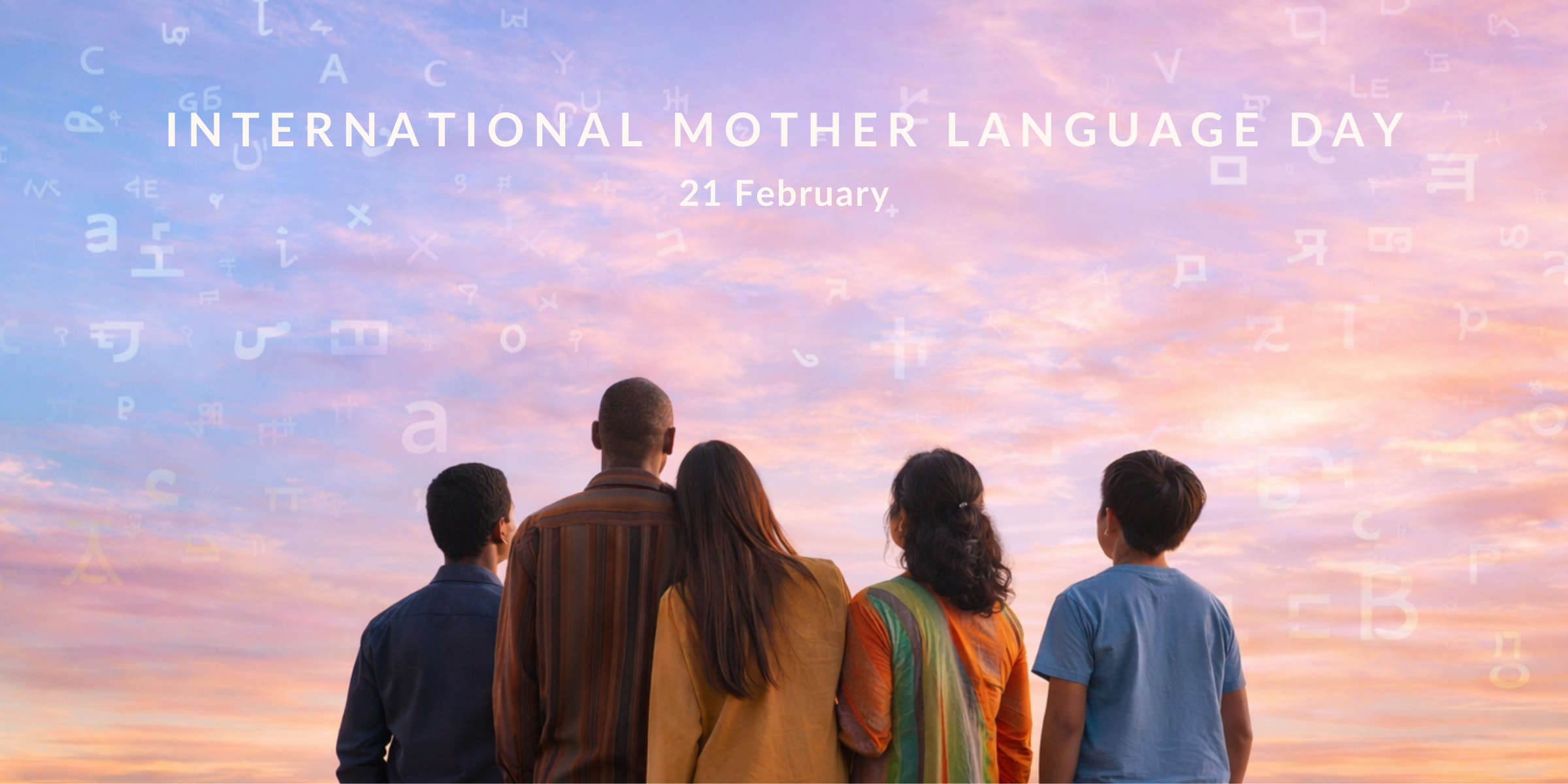
Every year on the 21st of February, International Mother Language Day is observed around the world as an initiative of UNESCO to promote linguistic diversity and multilingual education. On the surface, it may appear as one more awareness day among many, but for millions of people, it touches something far more intimate: the languages that shaped their earliest experiences, relationships, and understanding of the world.
A mother language is often described as the first language we learn, yet this definition rarely captures the complexity of real lives. Many people grow up with more than one language from birth. Others acquire new primary languages through migration, schooling, or family change. Some feel a strong emotional bond to a language they no longer speak fluently, while others use several languages daily without being able to clearly label any single one as “first.” In this sense, a mother language isn’t so much a technical category as it’s a relationship. One formed through repeated moments of care, communication, and belonging.
These relationships begin early and develop quietly over time. They take shape in bedtime stories, everyday routines, songs, arguments, jokes, and half-finished sentences spoken around kitchen tables. Long before we learn grammar rules, we learn what it feels like to be spoken to kindly, impatiently, lovingly, or gently. Language becomes tied to emotion, memory, and identity in ways that are difficult to separate. Even later in life, when another language becomes dominant, those early connections don’t simply disappear; they continue to influence how we express ourselves and how we understand others.
International Mother Language Day invites us to acknowledge this emotional depth while also recognising the broader significance of linguistic diversity. With thousands of languages spoken across the world, humanity holds an extraordinary range of cultural knowledge, histories, and ways of interpreting reality. When languages disappear, we don’t just lose words. We lose stories, worldviews, and forms of expression that can’t be fully translated or replaced.
Despite this, multilingualism is still frequently misunderstood. Families are sometimes advised to reduce language use at home in order to “simplify” children’s development. Accents are often treated as flaws rather than natural signs of multilingual experience. Home languages may be tolerated, but they aren’t always valued. These attitudes send a quiet but powerful message about which languages, and which people, are considered legitimate.
Research has long shown that growing up with multiple languages doesn’t confuse children or prevent healthy language development. Multilingual children may distribute their vocabulary across languages, but their overall linguistic capacity develops just as robustly. Yet beyond research findings, there’s a more fundamental question of dignity. Children who are encouraged to use and maintain their home languages receive confirmation that their families, cultures, and identities are worthy of space in schools, communities, and public life.
Celebrating International Mother Language Day doesn’t require grand gestures. It can be as simple as choosing to use your home language more intentionally for a day, reading a book or listening to music in that language, or sharing stories about where your family’s languages come from. It can mean asking others about their linguistic backgrounds with genuine curiosity, or noticing the languages that already surround you in everyday life, often in ways we’ve learned to overlook.
It can also involve quieter forms of respect: allowing people to speak without correcting their accent, resisting the impulse to equate fluency with intelligence, and accepting that communication doesn’t need to be perfect in order to be meaningful.
While having a designated day of recognition matters, languages deserve care beyond a single date on the calendar. Celebrating languages all year round means supporting educational approaches that respect home languages, advocating for inclusive communication practices, and challenging deficit-based narratives about multilingualism whenever they arise. It also means making room for complexity, including the complicated feelings many multilingual adults carry about their languages; feelings of loss, distance, pride, or unfinished learning.
International Mother Language Day isn’t about idealising language journeys or judging past choices. It’s about recognising that language histories are shaped by circumstance, opportunity, and survival as much as by preference. Every language story, in its own way, reflects adaptation.
Whether you speak one language or several, whether you’re fluent or still learning, whether your relationship with your mother language feels strong or fragile, it’s worthy of acknowledgment. Languages don’t compete with one another. They coexist, overlap, and change, much like the people who use them.
International Mother Language Day reminds us that languages aren’t abstract systems. They are living, changing parts of people’s lives. They hold memories, relationships, and histories. They carry tenderness, conflict, humour, and hope. Taking time to notice and honour this — whether in our own lives or in the lives of others — is a small but meaningful way of contributing to a more linguistically inclusive world.
If you’re raising a multilingual child, living in a multilingual family, or navigating life between languages and cultures, you don’t have to figure everything out on your own. I offer personalised multilingualism consulting and support for families and individuals who want to better understand multilingual development, strengthen their relationship with their languages, and make everyday communication feel more confident and sustainable.
You can find more information about my work and current offers on my website. I also share ongoing reflections, practical insights, and resources on Instagram, Facebook, and LinkedIn.
Leave a Reply